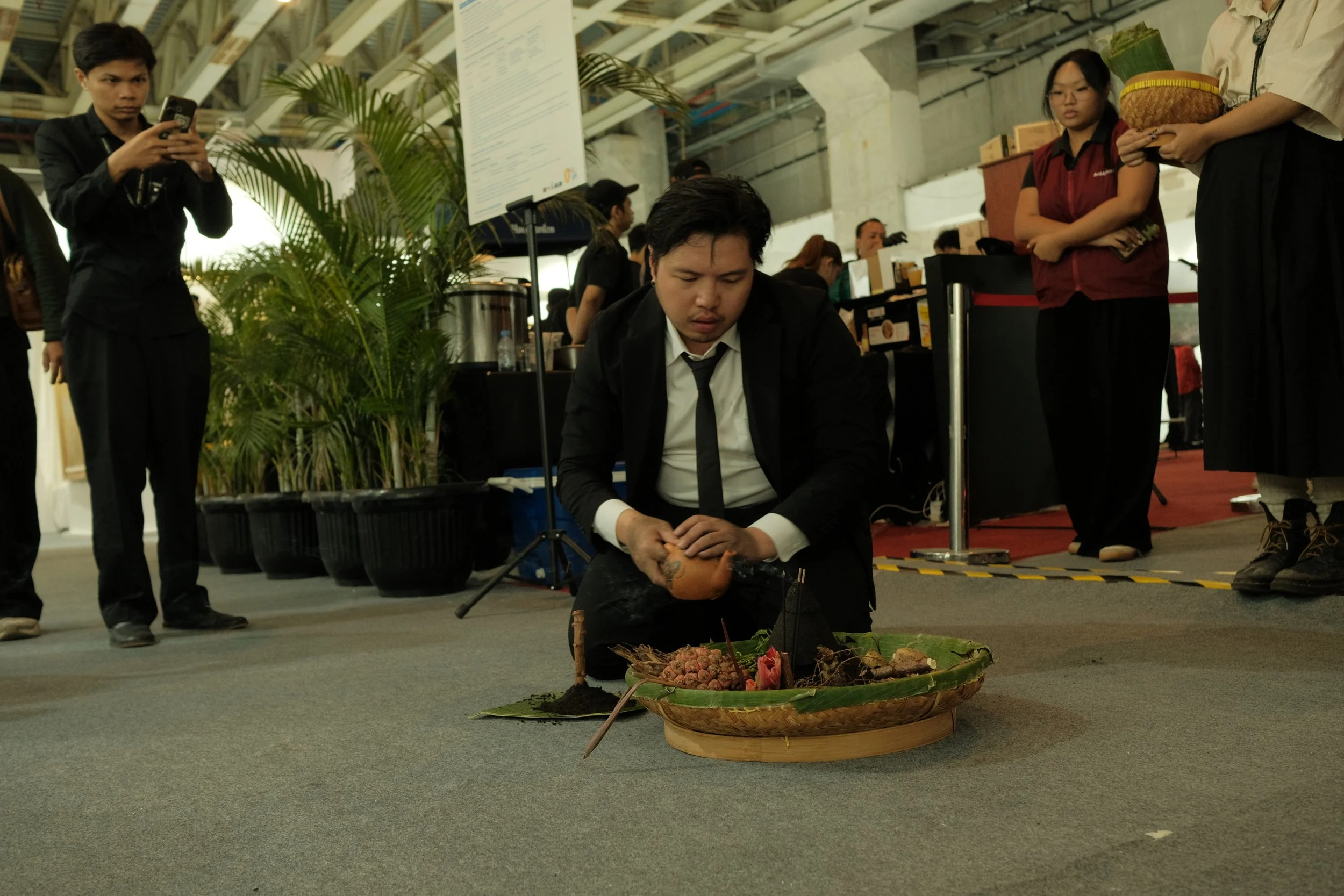
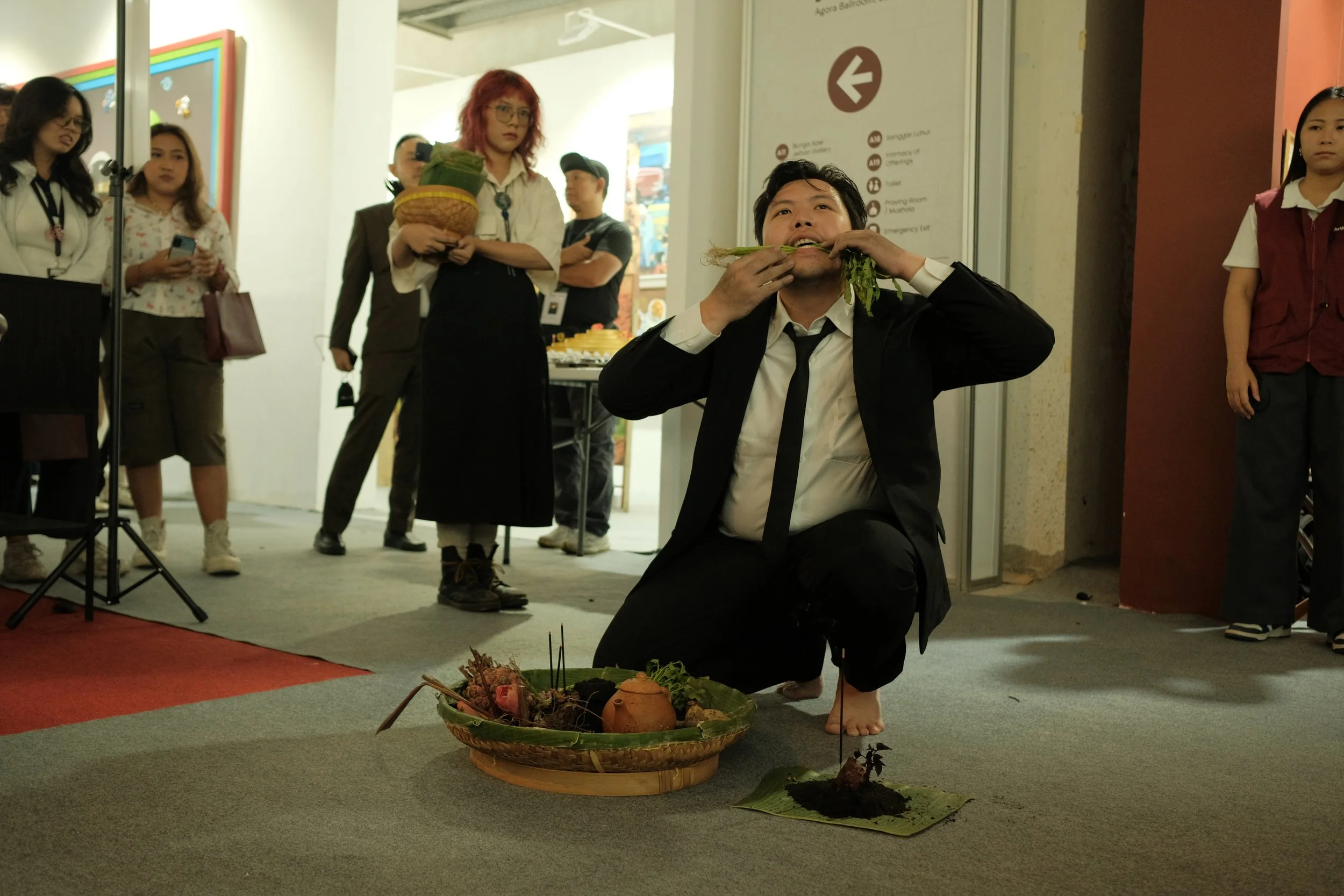
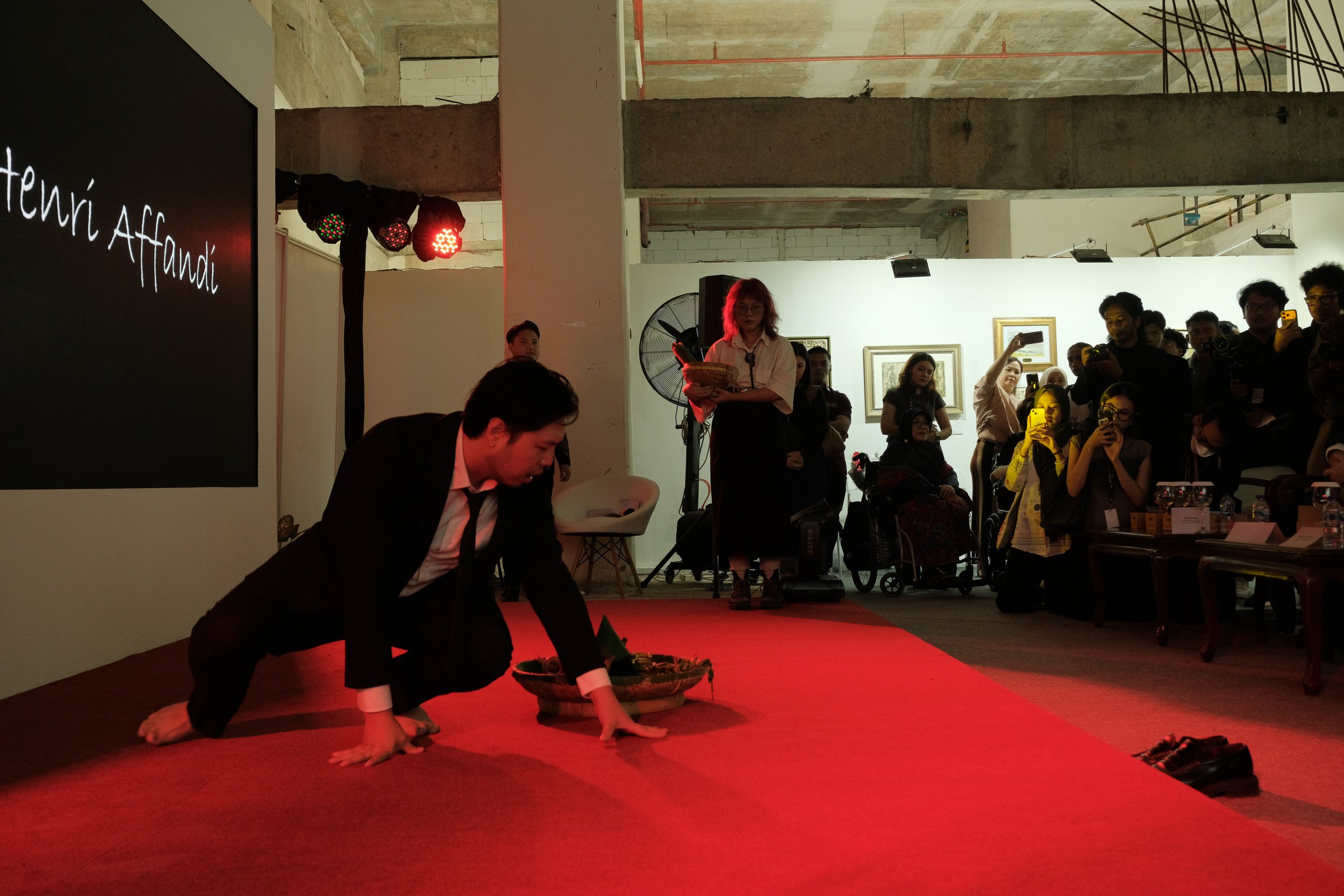
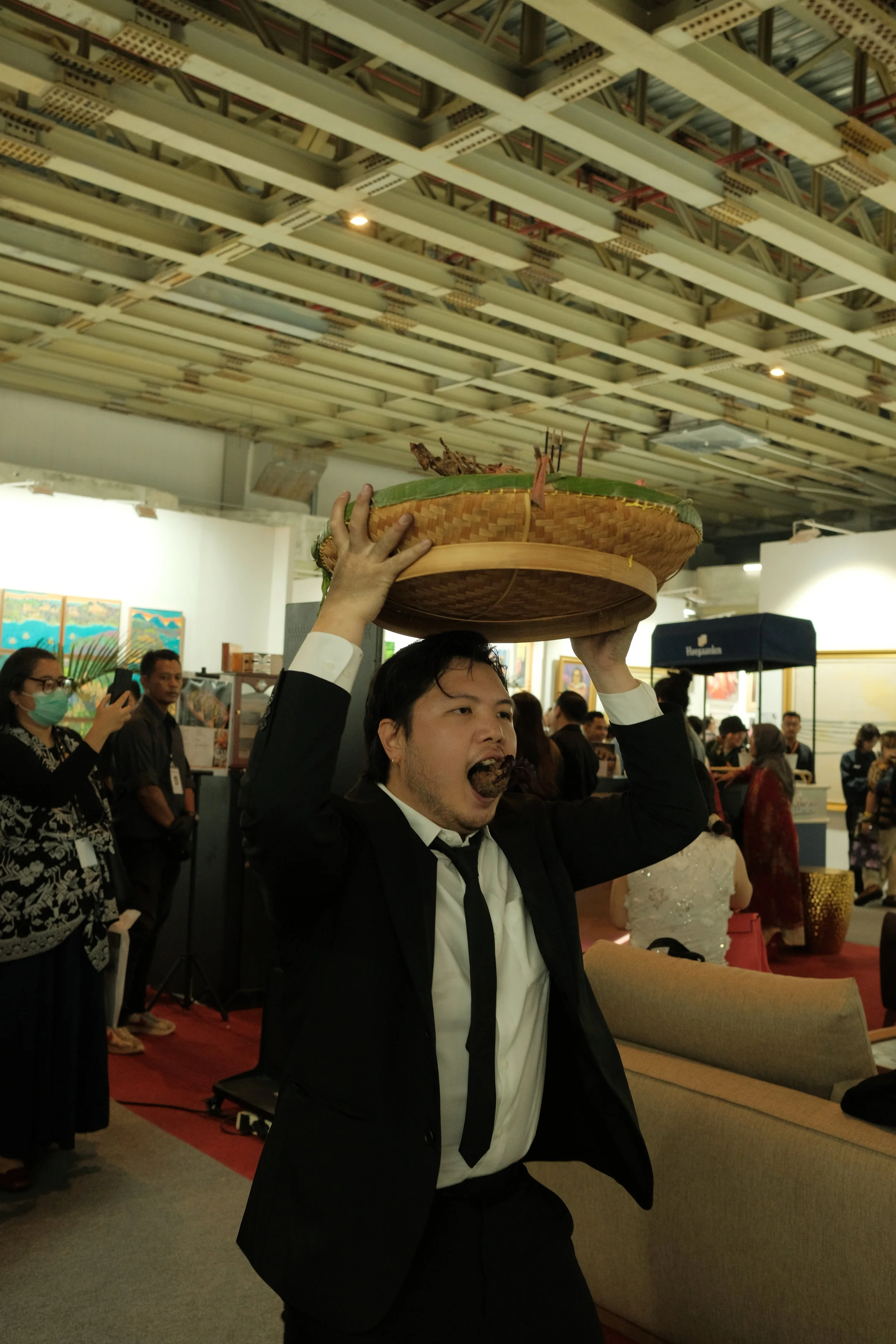
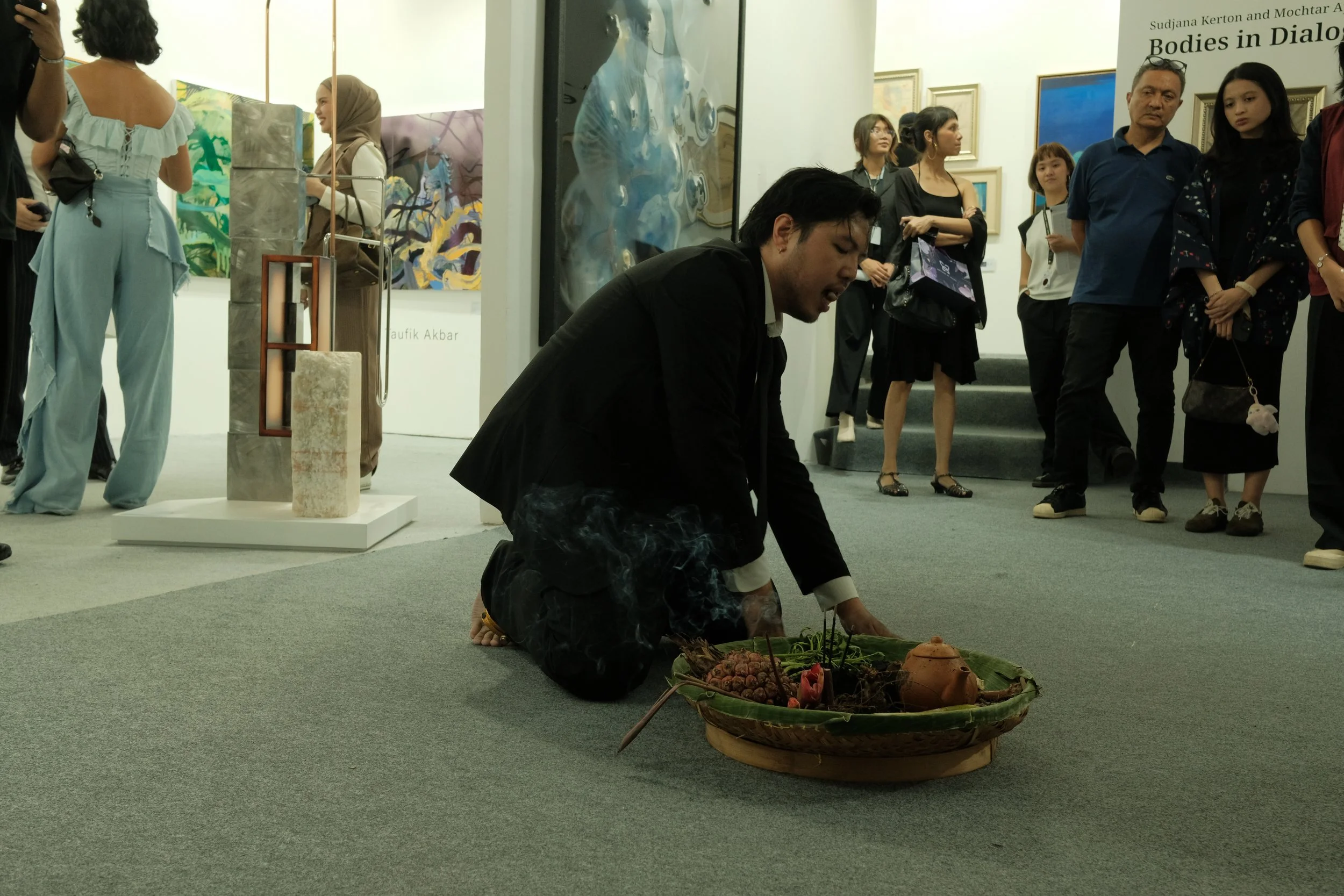
Utilising performance art as the embodiment of the Sanskrit words ‘sajja’ and ‘sani’, Affandi reimagines artmaking as an act of service towards Mother Earth, seeing labour and cultivation not only as mere process, but rather as the offering itself.
Nasi Tumpeng acts as the starting point of the performance, both conceptually and literally. In Sajja (2026), the act of consumption is replaced with cultivation by using soil and fertiliser instead of cooked rice, with seven different types of seedlings as its ‘lauk’, which the artist ritualistically plants across the performance space.
Performed in the ground floor of the tallest building in the Southern Hemisphere, the performance itself becomes an intervention that seeks to highlight the exploitation of rural regions in order to build a colossal metropolis like Jakarta. The juxtaposition between the artist and audience’s positionality within society with the act of agricultural labour represents the urgent need to give back to both Mother Nature and the underprivileged in rural areas, something that is often neglected in a hyper-capitalist culture.
To tend for Mother Earth is a revolutionary act of repair; and to grow is to present the ultimate form of offering.